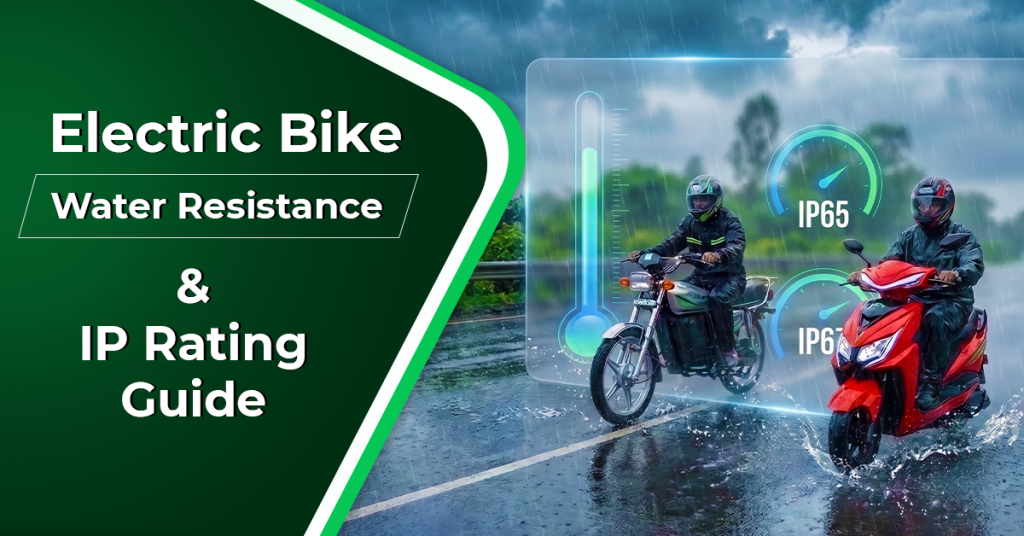
Rain is a part of life in Pakistan, and if you’re riding an electric bike, you’ve probably wondered whether a sudden downpour or a puddle-filled street can damage your ride. This is where IP ratings come in. Understanding what they mean can help you ride confidently, protect your investment, and get the most out of your electric bike whether that’s the ELFA EV-125 or the EV-1 Scooty.
What Is Electric Bike Water Resistance?
Electric bike water resistance refers to how well key electrical components, including the battery, motor, controller, and wiring, are protected from rain, moisture, and splashes. Sealed connectors, protective battery casings, and moisture-resistant wiring help reduce the risk of water damage during everyday riding. However, water-resistant does not mean completely waterproof. Electric bikes are designed to handle normal rain and wet roads, but deep puddles, flooded streets, and submersion should always be avoided.
Water-Resistant vs Waterproof: What’s the Difference?
These two terms are often used interchangeably, but they mean very different things.
- Water-resistant means a product can handle exposure to water such as rain, splashes, or light spray without being damaged, but it isn’t designed for extended periods of time.
- Waterproof means a product is completely sealed and can withstand submersion in water for a period of time without any damage.
Most electric bikes, including ELFA’s models, are water-resistant rather than fully waterproof.
What Are IP Ratings?
IP stands for Ingress Protection, and an IP rating is an international standard used to measure how well a device is protected against solid particles (like dust and dirt) and liquids (like water). You’ll see this rating written as “IP” followed by two numbers, for example IP65 or IP67.
Manufacturers use IP ratings to give riders a clear, standardized way to understand how much environmental exposure a product’s battery, motor, or electronics can handle. For electric bikes, the IP rating usually applies to the battery pack and the controller, since these are the components most vulnerable to water damage.
Understanding IP Rating Numbers
Each digit in an IP rating tells you something specific:
- First digit (0–6): Protection against solid objects and dust. A 6 means the component is completely dust-tight.
- Second digit (0–9): Protection against liquids. Higher numbers mean stronger resistance to water, from light moisture (2–3) to jets of water (5–6) to temporary submersion (7–8).
For example, an IP65 rating means the component is fully dust-tight and protected against low-pressure water jets from any direction, making it well-suited for riding in rain and wet roads. An IP67 rating adds protection against temporary submersion in shallow water.
Common IP Ratings for Electric Bikes
Most electric bikes and scooters on the market fall somewhere between IP54 and IP67:
- IP54: Basic protection against dust and light splashes suitable for dry to mildly damp conditions.
- IP65: Strong protection against dust and water jets ideal for regular rain and wet-road riding.
- IP67: High-level protection, including brief submersion in shallow water best for heavy rain and flooded streets.
ELFA electric bikes, including the EV-125 and EV-1 Scooty, feature a water-resistant battery designed to protect the power system from rain and wet conditions, so you can ride confidently through the monsoon season without worrying about sudden downpours affecting performance.
How Water Resistance Protects Your Electric Bike
Water resistance isn’t just a nice-to-have feature it directly protects the parts of your bike that matter most:
- Battery protection: Prevents moisture from entering battery cells, which reduces the risk of short circuits, corrosion, or reduced battery life.
- Motor protection: Keeps the motor housing sealed against water so performance stays consistent even in wet weather.
- Controller and wiring protection: Shields sensitive electronics and connectors from corrosion and electrical faults caused by water exposure.
- Longer bike lifespan: Reduces long-term wear caused by rust, corrosion, and electrical damage, helping your bike stay reliable for years.
This is especially important in Pakistan, where sudden rain, humid weather, and waterlogged streets during monsoon season are common realities for daily commuters.
Can You Ride an Electric Bike in the Rain?
Yes, if your electric bike has a water-resistant design, like ELFA’s EV-125 and EV-1 Scooty, you can ride safely in light to moderate rain. The water-resistant battery and sealed components are built to handle everyday wet-weather riding, including rain, splashes from the road, and damp conditions.
- Avoid riding through deep water or flooded roads, as submersion can damage even water-resistant bikes.
- Ride at a slower, controlled speed in wet conditions to maintain traction and stability.
- Avoid heavy braking on wet roads; use gradual braking instead.
- Avoid parking or leaving the bike in standing water for long periods.
- Make sure water does not rise up to the battery box, as excessive water exposure can damage electrical components.
- After riding in heavy rain, wipe down the bike and check the battery connector area for any moisture buildup.
- Park the bike in a dry, covered area whenever possible to protect it from prolonged exposure to rain and moisture.
Can Electric Bikes Be Washed Safely?
You can clean your electric bike, but how you do it matters. A damp cloth or gentle hose spray on the frame, tyres, and body panels is generally safe. However, never use high-pressure water or a pressure washer directly on the battery, controller, motor connectors, or digital LED meter, as excessive water pressure can force moisture into sensitive components. The charging port on the bike is sealed to prevent water from entering, but it should remain properly closed when not in use.
For best results, always ensure the bike is switched off and the battery is either removed or securely closed before washing, and let all components dry completely before charging or riding again.
Tips to Protect Your Electric Bike from Water Damage
- Avoid charging in wet areas: Never plug in your charger or charge the battery in a damp or rainy environment.
- Park under cover when possible: Prolonged exposure to rain and sun can wear down seals over time.
- Check seals and connectors periodically: Small cracks or worn seals can let moisture in over time.
- Dry the bike after rainy rides: A simple wipe-down helps prevent water from settling near sensitive parts.
- Avoid deep water crossings: Even water-resistant bikes aren’t built to handle deep puddles or flooded streets.
- Service your bike regularly: Routine checkups help catch minor water-related wear before it becomes a bigger issue.
Common Myths About Electric Bike Water Resistance
Myth 1: “Water-resistant means I can wash my bike with a pressure washer.” False pressure washers can force water past seals not designed for that level of pressure.
Myth 2: “Electric bikes can’t be ridden in rain at all.” Most modern electric bikes, including ELFA models, are designed with water-resistant batteries specifically so you can ride in rain and wet conditions.
Myth 3: “A higher IP rating means the bike is 100% waterproof.” False even high IP ratings like IP67 only guarantee protection under specific, limited conditions (such as short-term shallow submersion), not permanent underwater use.
Myth 4: “Once it rains on my bike, the warranty is void.” False normal exposure to rain is expected and covered under standard use; only damage caused by submersion or misuse would typically fall outside warranty coverage.
Frequently Asked Questions (FAQs)
Q1: Is the ELFA EV-125 water-resistant?
Yes, the ELFA EV-125 is water-resistant and designed to handle light rain and wet conditions, though submerging the bike or battery in water should be avoided.
Q2: Is the ELFA EV-1 Scooty water-resistant?
Yes, the EV-1 Scooty also features a water-resistant design suitable for everyday rain and wet-road riding.
Q3: What should I do if my bike gets caught in heavy rain?
Park it in a dry area as soon as possible, wipe down the exterior, and avoid charging until it’s fully dry.
Q4: Can water resistance wear out over time?
Yes, seals and protective coatings can degrade with age and exposure, which is why periodic servicing is important.
Q5: Does water resistance affect the battery warranty?
Normal rain exposure is expected and covered; damage from submersion or improper use typically isn’t covered under warranty terms.
Final Thoughts
Understanding water resistance and IP ratings helps you make an informed decision about your electric bike and how to care for it. With a water-resistant battery built into both the EV-125 and EV-1 Scooty, ELFA Electric bikes are designed to handle Pakistan’s unpredictable weather from sudden showers to humid city streets so you can ride with confidence, rain or shine.