The Real Cost of Charging an Electric Bike in Pakistan
Every Pakistani rider asks the same question first: what will it cost me to charge this thing?
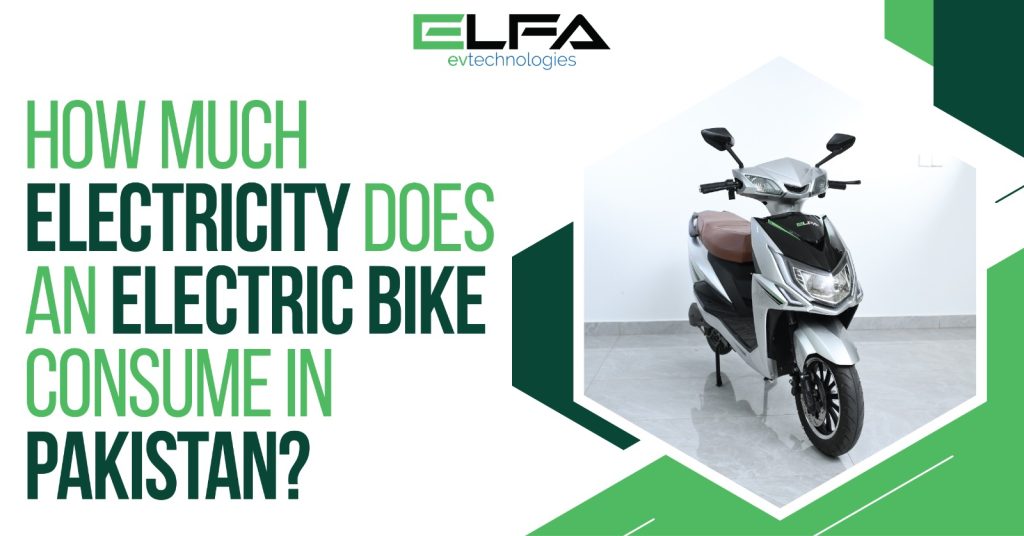
Petrol costs feel familiar. You watch the meter rise at the pump and pay what you see. Electricity feels different, especially after repeated tariff revisions and years of load-shedding. The uncertainty is understandable. But here is the reality: electric bikes consume far less electricity than most riders expect. Once you see the actual numbers, the decision becomes obvious.This guide breaks down exactly how many units the ELFA EV-125 and ELFA EV-1 Scooty consume per charge, what each charge costs in Pakistani rupees at current tariff rates, and how your monthly charging bill compares to what you are spending on petrol today, based on verified specifications and real electricity rates.
What Determines How Much Electricity an Electric Bike Uses?
Voltage and Battery Capacity — The Two Numbers That Matter
Every electric bike’s electricity consumption is determined by two core battery specifications: voltage (V), which represents the power level of the battery, and capacity (Ah ampere-hours), which tells you how much total energy the battery stores at a full charge. The formula is: voltage multiplied by capacity, divided by one thousand, equals kilowatt-hours (kWh). One kWh equals exactly one unit on your K electric, LESCO, or MEPCO bill. A well-engineered electric bike delivers the maximum possible range from every unit consumed.
Why Battery Chemistry Changes Your Monthly Bill
Battery type is not a minor detail. It is the single biggest factor in your long-term charging cost. Cheap lead-acid batteries degrade within twelve to eighteen months, cutting range nearly in half and forcing more charges per week. ELFA electric bikes use Lithium Iron Phosphate (LiFePO4) batteries, which maintain consistent capacity across more than 3,000 charge cycles, keeping your per-kilometre electricity cost stable and predictable for years.
ELFA EV-125 — Exactly How Many Units Per Charge?
Verified Specifications and the Real Calculation
The ELFA EV-125 runs on a 72V / 30Ah Lithium Iron Phosphate battery paired with a 2,000-watt motor. Applying the formula: 72 × 32 ÷ 1,000 = 2.304 kWh per full charge, approximately 2 units of electricity.That single charge delivers 100+ kilometres of real-world range at a top speed of 75 km/h, with a full charge completing in just 2 to 3 hours.
| Specification | ELFA EV-125 |
| Battery Type | LiFePO4 (Lithium Iron Phosphate) |
| Battery Capacity | 72V / 30Ah |
| Units Per Full Charge | ~2 units (kWh) |
| Real-World Range | 100+ km |
| Top Speed | 75 km/h |
| Motor Power | 2,000 Watts |
| Full Charge Time | 2 – 3 hours |
| Battery Warranty | 3 Years / 50,000 km |
| Price | Rs. 345,000 + Tax |
ELFA EV-1 Scooty — Electricity Consumption Per Charge
For riders preferring a lighter option and particularly women commuters seeking a practical everyday vehicle the ELFA EV-1 Scooty delivers the same electric advantage in a more accessible package. Running on a 60V / 30Ah Lithium battery with a 1,500-watt motor, it consumes approximately 2 units per full charge, covering 75 kilometres at a top speed of 60 km/h. A complete charge takes around three hours, and the starting price is Rs. 270,000 plus tax.
| Specification | ELFA EV-1 Scooty |
| Battery Capacity | 60V / 30Ah |
| Units Per Full Charge | ~2 units (kWh) |
| Real-World Range | 75 km |
| Top Speed | 60 km/h |
| Motor Power | 1,500 Watts |
| Full Charge Time | 2-3 hours |
| Starting Price | Rs. 270,000 + Tax |
What Does One Full Charge Cost in Pakistani Rupees?
Current Electricity Tariff Rates in Pakistan (2025)
Pakistan’s electricity rates depend on monthly consumption slab and regional distribution company. The following table reflects realistic rates for most urban households.
| Monthly Home Usage | Estimated Electricity Rate (Rs./Unit) |
| Up to 100 units | Rs. 13 – 16 |
| 101 – 200 units | Rs. 20 – 24 |
| 201 – 300 units | Rs. 26 – 30 |
| 300+ units | Rs. 35 – 45 |
Cost Per Full Charge — Broken Down by Tariff Rate
For a typical middle-income household consuming 200 to 300 units per month, the effective rate sits at roughly Rs. 28 to Rs. 35 per unit. At that rate, one full charge of the ELFA EV-125 costs between Rs. 56 and Rs. 70 delivering over 100 kilometres of real-world riding range.
| Rate Per Unit | Cost Per Full Charge | Range Covered |
| Rs. 20 | Rs. 40 | 100+ km |
| Rs. 28 | Rs. 56 | 100+ km |
| Rs. 35 | Rs. 70 | 100+ km |
A standard 125cc petrol bike covering the same 100 kilometres consumes approximately 1.7 litres at Rs. 283 per litre costing around Rs. 480 in petrol for the same journey. The ELFA EV-125 covers that same distance for Rs. 56 to Rs. 70 six to eight times cheaper, on every single ride.
| Rs. 151,019 Annual SavingAverage yearly saving when switching from a petrol bike to the ELFA EV-125 based on a 50 km daily commute at current fuel and electricity prices in Pakistan. |
Monthly Charging Cost — Three Real Rider Scenarios
| Rider Profile | Daily Distance | Monthly Units | Monthly Cost (Rs.) |
| City Commuter | 30 – 40 km | ~24 units | Rs. 480 – 840 |
| Regular Commuter | 50 – 60 km | ~33 units | Rs. 840 – 1,260 |
| Delivery / Heavy Rider | 80 – 100 km | ~58 units | Rs. 1,568 – 2,100 |
Understanding your real monthly EV charging cost depends on how far you actually ride each day. The following table reflects three common Pakistani rider profiles and what each pays in electricity per month.Even at the heaviest usage level 80 to 100 kilometres per day the monthly electric bike electricity cost stays below Rs. 2,100. Most petrol bike riders at that mileage spend that amount in under two weeks at the fuel pump.
Will Your Home Electricity Bill Increase Significantly?
For a daily commuter covering 50 kilometres, the ELFA EV-125 adds just 30 units to monthly electricity consumption, increasing your bill by roughly Rs. 840 to Rs. 1,050.That replaces a petrol bill of Rs. 5,000 to Rs. 7,000, delivering a net monthly saving of Rs. 4,000 to Rs. 6,000.Real ELFA owners confirm it. One EV-125 rider cut his monthly fuel spend from Rs. 15,000 to under Rs. 500, with zero maintenance costs.
How the LiFePO4 Battery Keeps Your Costs Stable for Years
The long-term stability of your electric bike electricity consumption depends almost entirely on how well the battery retains its capacity over time. The following comparison shows exactly why the ELFA LiFePO4 battery creates a lasting advantage over cheaper alternatives on the market.
| Feature | Lead-Acid Battery | ELFA LiFePO4 Battery |
| Cycle Life | 300 – 500 cycles | 3000+ cycles |
| Range After 18 Months | Degrades 30 – 50% | Consistently strong |
| Replacement Interval | 12 – 18 months | 8 – 10 years |
| Full Charge Time | 6 – 8 hours | 2 – 3 hours |
| Warranty | None typically | 3 Years / 50,000 km |
A lead-acid battery degrading to 60% capacity forces more frequent charging and a rising electricity bill, the opposite of what you intended. The ELFA LiFePO4 battery retains consistent performance across 3000+ charge cycles, delivering the same range three years later as Day 1.That confidence is backed by ELFA’s 3-year / 50,000 km battery warranty.
Annual Cost Comparison — ELFA Electric vs Petrol Bike
The table below shows the complete annual running cost difference between the ELFA EV-125 and a standard 125cc petrol bike, based on a 50 km daily commute.
| Cost Category Annually | Petrol Bike | ELFA EV-125 | Annual Saving |
|---|---|---|---|
| Fuel / Charging (50 km/day) | Rs. 171,094 | Rs. 20,075 | Rs. 151,019 |
| Engine Oil & Filters | Rs. 6,000 – 10,000 | Rs. 0 | Rs. 6,000 – 10,000 |
| General Maintenance | Rs. 5,000 – 8,000 | Rs. 2,000 – 3,000 | Rs. 3,000+ |
| Total Annual Running Cost | Rs. 182,094 – 189,094 7 | Rs. 22,075 – 23,075 | Rs. 159,019 – 167,019 |
Over three years of daily riding, total savings can reach Rs. 4.8–5.0 lakh, depending on fuel prices, maintenance, and riding habits. With petrol at Rs. 375 per litre, the ELFA EV-125 offers strong long-term cost savings compared to a 125cc petrol bike.
Frequently Asked Questions
Q1. How many units does the ELFA EV-125 use per charge?
Ans: The ELFA EV-125 uses approximately 2.3 units (kWh) per full charge and delivers 100+ km of riding range.
Q2. What does one full charge cost?
Ans: Depending on your electricity tariff, a full charge typically costs Rs. 40–70.
Q3. Will my electricity bill increase significantly?
Ans: No. Most riders spend only Rs. 840–1,050 extra per month on charging, while saving thousands on petrol.
Q4. How long does the ELFA EV-125 take to charge?
Ans: A full charge takes approximately 2–3 hours using the standard charger.
Q5. Does Sports Mode use more electricity?
Ans: Yes. Sports Mode consumes more power and reduces range, while Eco Mode offers maximum efficiency.
Q6. Can I charge the ELFA EV-125 with solar power?
Ans: Yes. The ELFA EV-125 is fully compatible with home solar systems, helping reduce charging costs even further.
Conclusion
The fear that an electric bike will point to your monthly electricity bill is one of the most common barriers stopping Pakistani riders from making a smarter financial decision. The verified numbers say otherwise.Two units of electricity. Rs. 56 to Rs. 70. One hundred kilometres of riding. That is the honest reality of owning an ELFA EV-125.For the average commuter, monthly charging costs sit between Rs. 840 and Rs. 1,260, a fraction of current petrol expenditure that stays stable year after year thanks to LiFePO4 battery technology. Petrol prices rise unpredictably. Electricity costs remain manageable. And for riders pairing ELFA with home solar, the charging cost approaches zero entirely.